Homemade Pita Bread: The Easy Recipe for Puffy Pockets
Homemade pita bread takes six things you already have: flour, water, yeast, salt, olive oil, sugar. You mix it, let it rise, roll the rounds thin, and lay them onto a very hot 475°F surface. The water inside turns to steam and opens each round into a pocket in about three minutes. That puff is what you're after.
Why this pita recipe works
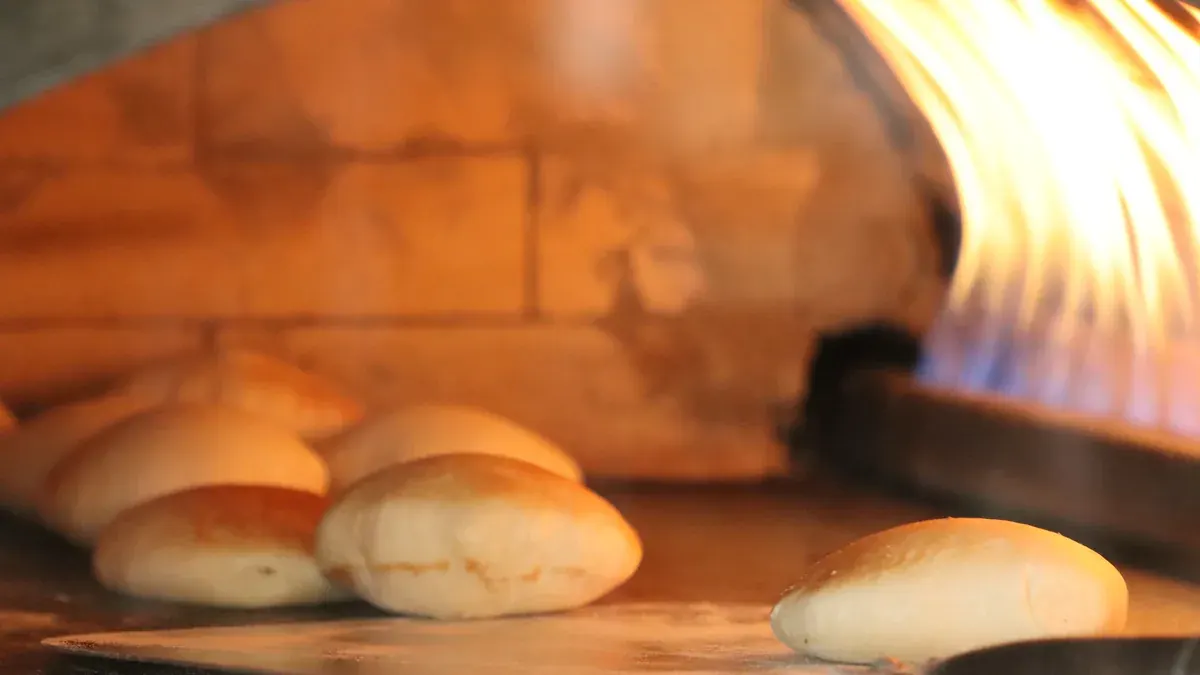
Pita is about the easiest bread there is, and yet that puff still gets me every time. It all comes down to heat. A hot oven at 475°F (245°C) and a surface you've preheated thoroughly will flash the water in the dough to steam, and that steam pushes the top and bottom apart into a pocket. Roll the rounds even, bake them fast, and most of them balloon right up.
You get eight soft, foldable pitas out of this, start to finish in under two hours. Most of that is the dough sitting there rising while you do nothing.
Ingredients
Six things, all of them probably in your kitchen right now:
- 3 cups (360g) all-purpose or bread flour, plus extra for dusting
- 1 1/4 cups (300ml) warm water (about 110°F / 43°C)
- 2 1/4 tsp (1 packet) active dry yeast
- 1 1/2 tsp salt
- 2 tbsp olive oil
- 1 tsp sugar
No-yeast variation: in a hurry? Leave out the yeast and sugar, swap in 1 1/2 tsp baking powder, and use plain yogurt for half the water. It's hit or miss on the pocket, but you'll have a soft flatbread for wraps in a fraction of the time.
Step-by-step instructions
| Detail | Value |
|---|---|
| Yield | 8 pitas |
| Prep time | 90 minutes |
| Bake time | 12 minutes total |
| Oven temp | 475°F / 245°C |
| Best for | Hummus, gyros, wraps, dipping |
Source: Recipe summary.
Go in order. This dough is forgiving, so don't stress over it.
- In a small bowl, stir the sugar and yeast into the warm water. Let it sit 5-10 minutes until foamy.
- In a large bowl, combine the flour and salt. Pour in the yeast mixture and olive oil. Stir until a shaggy dough forms.
- Knead on a floured surface for 8-10 minutes until smooth and elastic (or 5 minutes in a stand mixer with the dough hook).
- Place the dough in an oiled bowl, cover, and proof in a warm spot for about 60 minutes, until doubled.
- Punch down the dough and divide it into 8 equal pieces. Roll each into a ball, cover, and rest 10 minutes.
- Meanwhile, place a baking stone or inverted sheet pan on the middle rack and preheat the oven to 475°F (245°C) for at least 30 minutes.
- Roll each ball into a 6-inch round, about 1/4-inch thick and even all over. Uneven thickness is the most common reason a pita won't puff.
- Bake 2-3 rounds at a time directly on the hot surface for 3-4 minutes, until they balloon and the bottoms are lightly golden. Avoid opening the oven too early.
- Transfer baked pitas to a clean towel and cover to keep them soft while the rest bake.
Eat them warm, that's when they're best. They'll hold 2-3 days in a sealed bag, or stash them in the freezer for up to a month.
Troubleshooting and serving
Pitas came out flat? Nine times out of ten it's one of three things: the oven wasn't actually hot enough, you rolled the rounds unevenly, or they sat around and dried out before they hit the heat. And honestly, a flat one still tastes great — it just becomes a flatbread.
Warm pita belongs next to dips and grilled meat, full stop. If you're not in the mood to bake today, we bake our fluffy brick-oven pita bread fresh daily here in our Houston kitchen. It's on the menu next to the hummus and the Mediterranean plates. The recipe we use in the shop stays in the shop, but the version up top will get you most of the way there. Want more ideas? Check out 10 ways to use pita bread.
Our brick-oven pita is baked fresh every day in Houston — pillowy, halal, and ready to scoop, wrap, and dip.
See the Menu
Frequently asked questions
Why won't my homemade pita bread puff up?
Usually it's one of three things: the oven wasn't hot enough, you rolled the rounds to uneven thickness, or they sat out long enough for the surface to dry. Get your baking surface to a full 475F and let it heat for at least 30 minutes, then roll each round even at about 1/4 inch.
Can I make pita bread without yeast?
You can. Drop the yeast and sugar, add 1 1/2 tsp baking powder, and use plain yogurt for half the water. You'll get a soft flatbread fast, perfect for wraps, but don't count on a clean pocket the way the yeasted dough gives you.
Do I need a baking stone to make pita?
Nope. A stone holds heat beautifully and throws it back at the dough, but a heavy sheet pan flipped upside down or a cast-iron skillet, preheated good and hot, gets you nearly the same puff.
How do I keep homemade pita soft?
The second they're out of the oven, wrap them in a clean kitchen towel. The trapped steam keeps them soft and foldable instead of turning brittle. Once they've cooled, a sealed bag holds them 2-3 days, or freeze for up to a month.