Types of Pita Bread Explained
Pita comes in two basic kinds: pocket pita, which puffs up and leaves a hollow inside you can stuff, and pocketless pita, which stays soft and flat for wrapping or dipping. After that it's mostly regional. Greek, Lebanese, Arabic, and mini all read as "pita," but they differ in how thick they are, how big they are, and whether a pocket opens up. This page is a quick guide to telling those types apart; for the fuller story on pita, see our main pita bread guide.
The two main families: pocket vs pocketless
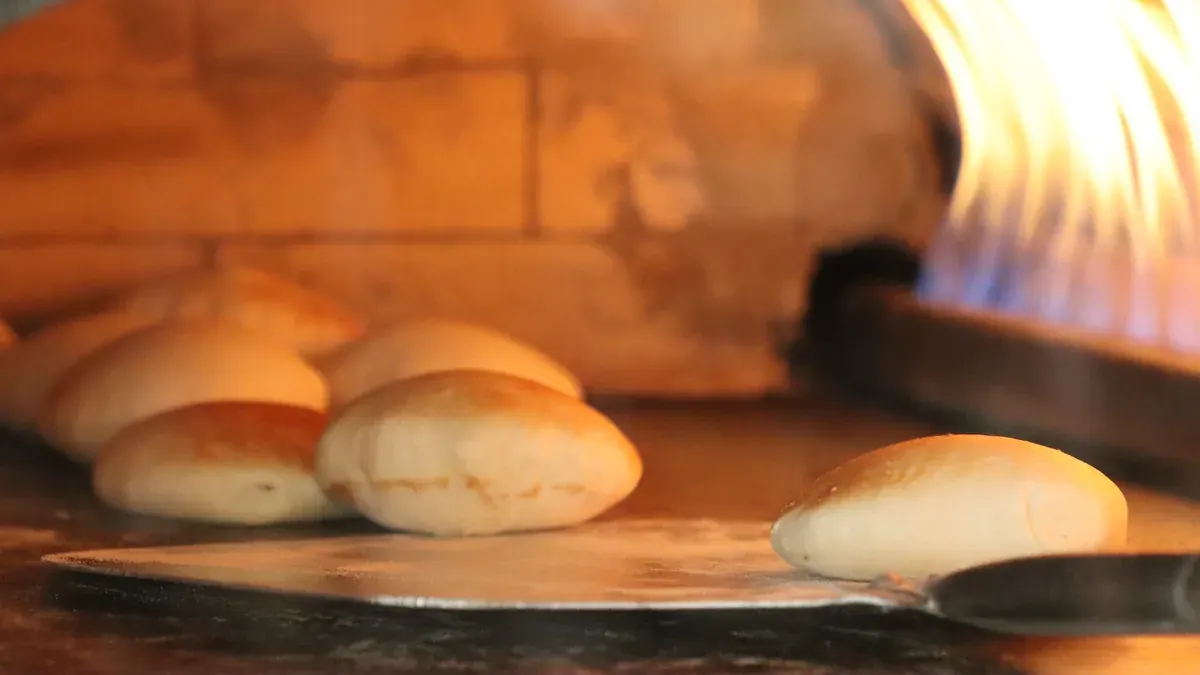
Most pita you'll run into is one of two kinds. Pocket pita goes into a very hot oven, the steam blows the dough up like a balloon, and once it settles you're left with that hollow middle. That's the one you stuff with falafel, shawarma, or a pile of salad. Pocketless pita never puffs. It stays soft and bendable, so you wrap with it or use it to scoop.
What we make at Aladdin is the pocket kind. It's the puffed, hollow bread that holds a filling well. We don't do gluten-free, low-carb, or pita chips. Just the classic wheat-flour pocket pita, baked the same way it has been here since 2006.
Comparing the common pita styles
| Type | Pocket? | Origin | Best for |
|---|---|---|---|
| Pocket pita | Yes | Levant / Middle East | Stuffing with falafel, shawarma, salad |
| Pocketless pita (Greek-style) | No | Greece / Eastern Mediterranean | Wrapping gyros, souvlaki, dipping |
| Lebanese / Arabic khubz | Often (thin) | Lebanon / Arabian Peninsula | Light wraps, scooping dips, soft pocket |
| Pita pocket (halved) | Yes | Levant (same bread, cut) | Sandwiches you fill from a cut edge |
| Mini pita | Yes | Levant | Appetizers, sliders, mezze platters |
Source: Pita bread style descriptions, en.wikipedia.org/wiki/Pita.
The differences below really come down to three things: how thick the bread is, how big it is, and whether it opens into a pocket. "Greek pita" is the exception, usually thicker and with no pocket, while Lebanese and Arabic khubz run thin and are often pocketed, though that varies by region and how they're used. Mini pita isn't a separate style. It's a small pocket pita meant for appetizers.
Which type should you use?
It depends on what you're doing with it. Something you fill and carry around in one hand? Go with pocket pita, or a pita cut in half so you've got an open edge to load. For a gyro, where the bread has to fold around everything and not split, a thicker pocketless Greek pita holds up better. And when you're dipping into hummus or baba ganoush, thin Lebanese khubz tears off in clean pieces and scoops well. Mini pita is the choice for a mezze spread.
For ideas on what to make with it, see our ways to use pita. Then grab some fresh pocket pita and a tub of spicy hummus off the full menu.
Aladdin bakes fluffy Lebanese-style brick-oven pita fresh every day in Houston — halal, and the base of our whole mezze table.
See the Menu
Frequently asked questions
What is the difference between pocket and pocketless pita?
Pocket pita puffs up in the oven and leaves a hollow center once it cools, so you can stuff it. Pocketless pita never puffs. It stays soft and flat, which makes it better for wrapping or scooping than stuffing.
Is Greek pita the same as regular pita?
Not quite. Greek-style pita usually has no pocket and runs a little thicker, since it's built for wrapping gyros and souvlaki. The classic Middle Eastern pita is thinner and opens into a pocket.
What is Lebanese bread or khubz?
Lebanese bread, also called Arabic khubz, is a thin pita found all over Lebanon and the Arabian Peninsula. It's often pocketed, though that varies by region and use. It's light and bendable, which makes it good for soft wraps and scooping up dips.
What kind of pita does Aladdin serve?
We serve traditional pocket pita, the puffed wheat-flour bread with the hollow middle that actually holds a filling. We don't offer gluten-free, low-carb, or pita-chip versions.